19 Jan 1992
TV series | Dir. Ross Devenish | Wr. Clive Exton
S. 4, ep. 3: 'One, two, buckle my shoe'
 Alex: "Again, a crime drama. This time, a lot depends on whether you can stomach Hercule Poirot or not.
"A murder must be solved, identities cleared, spoons put back on the saucers. In other words, Poirot's dentist is found dead: What at first seems to be a suicide, is only one piece of a greater puzzle, and more than one person appears not to be who they say they are. A typical detective mystery.
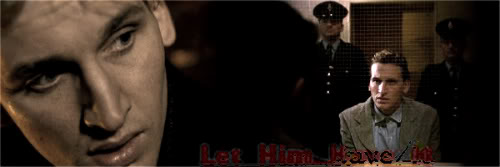
"Frank Carter is a haughty, angry young man, and it's a solid performance. Frank, bad tempered and a member of a nationalist movement, becomes an automatic suspect in the case. He's part of several important scenes, and that makes it definitely worthwhile even if you're not a Poirot fan.
"Notable is precise period detail, and some great Art Deco sets."
Conclusion: Plus is relatively good screen-time, minus might be the non-negotiable main hero of the series.
DVD Notes:
2003 "Granada" Region 2. No subtitles, no extras.
10 May 1992
TV short film | Dir. Vivianne Albertine | Wr. Leonora McBolt
Role: Man from the dream.
Video example - Gallery - IMDb - N/A

Alex: "First off-the-wall role. A short sci-fi film, part of a project. It has ideas – kudos for the environmental message – but the quality of the narrative and execution is wanting. It's one of those early 90s TV affairs that dated really badly. The story is set in the industrialized future (makeshift 'Blade Runner') where this 'Man from the dream' apparently crosses dimensions to help a girl fighting injustice and pollution."
Conclusion: A peculiarity, interesting as such, but not much more than that.
TV short film | Dir. Vivianne Albertine | Wr. Leonora McBolt
Role: Man from the dream.
Video example - Gallery - IMDb - N/A

Alex: "First off-the-wall role. A short sci-fi film, part of a project. It has ideas – kudos for the environmental message – but the quality of the narrative and execution is wanting. It's one of those early 90s TV affairs that dated really badly. The story is set in the industrialized future (makeshift 'Blade Runner') where this 'Man from the dream' apparently crosses dimensions to help a girl fighting injustice and pollution."
Conclusion: A peculiarity, interesting as such, but not much more than that.
ETA 2014: Viv Albertine's memoir 'Clothes Clothes Clothes Music Music Music Boys Boys Boys' does mention directing "Kate Beckinsale and Christopher Eccleston in their first film
roles" (as reported here), but that is all.
15, 22, 29 May 1992
TV mini series (3 parts) | Dir. Marc Evans | Wr. Alick Rowe
 "Three part drama about a wife coming to terms with the death of her husband in a flying accident." [source]
Alex: "After Peter Ross' death in a crash during a training flight, his widow Louise is left in shock and confusion. Sean Maddox, Ross' fellow fighter jet pilot, is appointed as Effects Officer and then acts as liaison between her and the air force. And then Louise and Sean develop a relationship. More confusion ensues. And why did Peter's plane crash? At the same time the crews count the days before they are dispatched to the Gulf.
"What impressed me most was that Sean actually is a fighter jet pilot and not just a desk job officer as I had concluded from other descriptions. Otherwise there's not much to be excited about. It's a very unrefined performance (incidentally, it's more similar to the late 90s 'off chance roulette' roles than the 1992-4 ones), but mostly it's due to the way the character is written. Sean appears to be immature, naive and selfish. His choices, decisions, regrets or lack of same do not combine. He goes as the wind blows, and even if that's how he should be perceived, there are not enough nuances to clearly understand which are the bedrock personality traits and which are deviations.
 "First episode focuses on the distraught widow, and it's not an easy watching. Worse, there are no motivations for Sean's actions – only in the second part there is more revealed about him (he has a wife, a nice, clever woman, and two children), but hopes for explanations are short-lived. I could more or less accept Louise's mental journey, how she went through various levels of grief and guilt and how her attitude towards Sean changed. That Maddox thought his wife had been taking him for granted is a very flimsy excuse and on his side there's no development whatsoever (apart from belated realisation that yes, he might had been an idiot) throughout the serial.
"So is it just a melodrama? Well no. It tries to be experimental, there are several peculiar 'visions' sequences and often on the picture side it's indeed impressive – the raw nature, winter – with breath often visible even indoors (for example in the wonderfully lit scene where Sean has been sleeping in the locker room). But most importantly it also aspires to be a 'current affairs' drama. Set in and around the military base, the whole serial's background, just like every TV screen, is occupied by the Gulf War. Allegedly the way the authors pictured the RAF (generals saving their skins, possibly covering up problems) wasn't met too warmly – peculiar, given the obvious huge involvement of the air force in the production. Unclear now if it's the reason why it wasn't repeated or released.
 "Anyway, the main point is, do they get away with this concoction? Once again, no. There are good scenes, especially in the third episode, but generally the serial really struggles to rein the pathos in. And the resulting melodrama with its clichés at some moments looks rather silly compared to the huge and serious backdrop, and at other moments said backdrop is being trivialised, lowered to the tabloid level of topicality. While the women are reasonably well personalised, the pilots' discussions about their mission, their lives stay rather abstract and there are only broad strokes spared to make them distinguishable from one another.
"I do realize my impressions are very affected by the changes in television presentations, and at the time of TX it must have looked better. But I did a test: Would this story work if it was about builders? And the answer is yes. Because the context remained a context and didn't become reason, cause, effect, a character's skeleton. And so it can be replaced. And it's a shame."
Conclusion: Of all the AWOL features, 'Friday On My Mind' is not the one I'd be worrying about the most.

DEATH AND THE COMPASS
5 Aug 1992 (new, extended version 1995)
Film | Dir. Alex Cox | Wr. Jorge Luis Borges (short story) & Alex Cox
Role: Alonso Zunz (et al.)
Video example - Gallery - IMDb - Get: Region 1, Region 2, All Regions
 Alex: "A bright one from the early period. We have only watched the recut version, and all our impressions hail from that.
"Sometime, somewhere a legendary detective called Eric Lonnrot is trying to solve yet another crime. His superior, Commissioner Treviranus, as much as he admires Lonnrot, would rather pin the murders on the city's ganglord, 'criminal philanthropist' Red Scharlach. But the detective, in search of a more rabbinical explanation, beguiled by the spooky small-time journalist Alonso Zunz, weaves the mystery he is at the same time cracking."
Chiclit: "Great, creative visuals, bold colors, this film is not mainstream, but one character has narrative exposition scenes so you can follow along ok. Do NOT miss the final minutes of the film – Chris rocks the end of this film with an intense, bigger than life final scene that will remind you of Heath Ledger's Joker – except that Chris got there first.

"See this on the largest screen you have. Because of the visuals this film would be interesting to comic book/anime fans. Also this film reminds you Peter Boyle is not just Raymond's dad."
A: "Moreover, use the best hi-fi system, because the sound design, which all too often gets the bulk of the flack, is extremely innovative and assists the story, creating a surreal level of its own.
"This is perhaps one of the most memorable CE films, and not only because of his outstanding performance, but also because it manages to create its own consistent universe, with its own visual expression and narrative logic. This adaptation of J. L. Borges' short story develops a particularly successful reflection of the mood and atmosphere specific to the author. It's an exceptional piece of cinematography, the way the film works as a whole."
Conclusion: Recommended, might be a challenge, but it's a gratifying one.
More info at director's site here (direct link – listen to the intro and title music).
DVD Notes:
2005 "BFI Video" Region 2 (double bill with 'Straight to Hell'). Extras: Paul Miller's 'Spiderweb' (alternative adaptation); Commentary by director A. Cox and composer D. Wool.
2001 "ILC Film" All Regions. No subtitles. Extras: Commentary by director A. Cox and composer D. Wool.
5 Aug 1992 (new, extended version 1995)
Film | Dir. Alex Cox | Wr. Jorge Luis Borges (short story) & Alex Cox
Role: Alonso Zunz (et al.)
Video example - Gallery - IMDb - Get: Region 1, Region 2, All Regions
 Alex: "A bright one from the early period. We have only watched the recut version, and all our impressions hail from that.
"Sometime, somewhere a legendary detective called Eric Lonnrot is trying to solve yet another crime. His superior, Commissioner Treviranus, as much as he admires Lonnrot, would rather pin the murders on the city's ganglord, 'criminal philanthropist' Red Scharlach. But the detective, in search of a more rabbinical explanation, beguiled by the spooky small-time journalist Alonso Zunz, weaves the mystery he is at the same time cracking."
Chiclit: "Great, creative visuals, bold colors, this film is not mainstream, but one character has narrative exposition scenes so you can follow along ok. Do NOT miss the final minutes of the film – Chris rocks the end of this film with an intense, bigger than life final scene that will remind you of Heath Ledger's Joker – except that Chris got there first.

"See this on the largest screen you have. Because of the visuals this film would be interesting to comic book/anime fans. Also this film reminds you Peter Boyle is not just Raymond's dad."
A: "Moreover, use the best hi-fi system, because the sound design, which all too often gets the bulk of the flack, is extremely innovative and assists the story, creating a surreal level of its own.
"This is perhaps one of the most memorable CE films, and not only because of his outstanding performance, but also because it manages to create its own consistent universe, with its own visual expression and narrative logic. This adaptation of J. L. Borges' short story develops a particularly successful reflection of the mood and atmosphere specific to the author. It's an exceptional piece of cinematography, the way the film works as a whole."
Conclusion: Recommended, might be a challenge, but it's a gratifying one.
More info at director's site here (direct link – listen to the intro and title music).
DVD Notes:
2005 "BFI Video" Region 2 (double bill with 'Straight to Hell'). Extras: Paul Miller's 'Spiderweb' (alternative adaptation); Commentary by director A. Cox and composer D. Wool.
2001 "ILC Film" All Regions. No subtitles. Extras: Commentary by director A. Cox and composer D. Wool.
9 Sep 1992
TV short film | Dir. Uwe Janson | Wr. David Spencer
Role: 'Angel' Morris (neo-Nazi).
Video example - Gallery - IMDb - Rent

"Angel, a veteran of the British National Party, arrives in Berlin with his girlfriend to collect a shipment of arms. Ironically, he finds himself compromised by his Polish origins." [source]
Video example - Gallery - IMDb - Rent

"Angel, a veteran of the British National Party, arrives in Berlin with his girlfriend to collect a shipment of arms. Ironically, he finds himself compromised by his Polish origins." [source]
Alex: "I haven't watched the whole feature, only the extracts (ca. 9 out of 23 mins; of very low picture quality), but here are some thoughts.
"Probably it's not very difficult to portray a skinhead. Get a costume, shave your head and heil away. Portrayal of Angel feels different, not only because of the character's background, but also because his anger is complicated, nuanced and other emotions are showing through. The body language is different than in other films from this period, and the overall result is both chilling and moving.
"Probably it's not very difficult to portray a skinhead. Get a costume, shave your head and heil away. Portrayal of Angel feels different, not only because of the character's background, but also because his anger is complicated, nuanced and other emotions are showing through. The body language is different than in other films from this period, and the overall result is both chilling and moving.

"The first extract (from the beginning) shows an attack on a Turkish family, which is quite basic, but its purpose must also be to show the differences in attitude in the group of skins. The second is a scene between Morris, his girlfriend and the local skin. The third is a scene where Morris tries to make a gun deal and gets blackmailed. In the fourth his past is exposed and he almost becomes the target of his previous mates.
"It would be interesting to watch the whole film, for it is obvious that this role is rather impressive."
More info at screenonline.org.uk site here (video extracts require permission, watch in your library if you're in the UK).

ETA: "After watching the whole feature, I stand by my initial comments. In no time at all a complex character emerges. But it's also problematic. Apparently Morris ended up with the skins thanks to his need to belong and not be seen as a weak outsider. But from the start he's shown fighting for his position, and maybe trying too hard, and you never believe that his lectures are more than just a front. This does make you sympathise with the character, but pity in this instance is not very helpful."
Conclusion: The film shows a culmination rather than a breaking point. It could've been really interesting to see Morris back home, where he transits from one culture to another. As it is, it's all about acting, and it's fascinating to watch.
28 Nov 1992
TV film | Dir. Simon Curtis | Wr. Arnold Wesker
Role: Frankie Bryant.
Video example - Gallery - IMDb - N/A
 Note: Different policy re images in this review - feel free to download, but please do not reuse them in any form elsewhere online, thank you.
"Presentation of Arnold Wesker's play of the 1950s. A young girl [Beatie Bryant] returns to her family home in Norfolk, having been educated in cultural and political matters by her boyfriend Ronnie. Through trying to pass on what she has learned, she discovers her own voice and views." [source]
Alex: "This is real-life time travelling gone wrong. 'Roots' tries to be absolutely truthful, recreating the kitchen sink film era from the 60s and celebrating the original play, tries to bring the message unaltered, choosing not to update it in any way, but only manages to achieve a stilted look of the less successful teleplays and is 30 years painfully late.
"Frankie is Beatie's brother. He's an example of local people with their local interests (he tells a sort of damning story about one of their relatives – but only gets a swat with a rolled-up newspaper over the head for his trouble). I'm not familiar with Norfolk accent at all, so I cannot comment on the differences between various characters' speech – but Frankie did sound American a couple of times, maybe also because, due to the manners, overall portrayal, I could easily picture him as, say, a middle son in 'East of Eden'.
"Most of the time, Frankie is just one of the listeners. The whole film is really one long monologue of the heroine who will TELL you about ALL THESE THINGS she's learnt in LONDON. I think they call such personalities 'bubbly'. Only, it's more like a bubble. It must be said that the source material is quite good (a line about a dream where the heaven was full of movie stars and soldiers stuck with me), it's just not put to the best use."
Conclusion: Minor role in all regards. Frankie appears in the final third of the film – you can skip to the last act without any repercussions.
'Roots' can only be watched at the BFI Mediatheques.
More info at screenonline.org.uk site here (video extracts require permission, watch in your library if you're in the UK).

ETA: "After watching the whole feature, I stand by my initial comments. In no time at all a complex character emerges. But it's also problematic. Apparently Morris ended up with the skins thanks to his need to belong and not be seen as a weak outsider. But from the start he's shown fighting for his position, and maybe trying too hard, and you never believe that his lectures are more than just a front. This does make you sympathise with the character, but pity in this instance is not very helpful."
Conclusion: The film shows a culmination rather than a breaking point. It could've been really interesting to see Morris back home, where he transits from one culture to another. As it is, it's all about acting, and it's fascinating to watch.
28 Nov 1992
TV film | Dir. Simon Curtis | Wr. Arnold Wesker
Role: Frankie Bryant.
Video example - Gallery - IMDb - N/A
 Note: Different policy re images in this review - feel free to download, but please do not reuse them in any form elsewhere online, thank you.
"Presentation of Arnold Wesker's play of the 1950s. A young girl [Beatie Bryant] returns to her family home in Norfolk, having been educated in cultural and political matters by her boyfriend Ronnie. Through trying to pass on what she has learned, she discovers her own voice and views." [source]
Alex: "This is real-life time travelling gone wrong. 'Roots' tries to be absolutely truthful, recreating the kitchen sink film era from the 60s and celebrating the original play, tries to bring the message unaltered, choosing not to update it in any way, but only manages to achieve a stilted look of the less successful teleplays and is 30 years painfully late.

"Frankie is Beatie's brother. He's an example of local people with their local interests (he tells a sort of damning story about one of their relatives – but only gets a swat with a rolled-up newspaper over the head for his trouble). I'm not familiar with Norfolk accent at all, so I cannot comment on the differences between various characters' speech – but Frankie did sound American a couple of times, maybe also because, due to the manners, overall portrayal, I could easily picture him as, say, a middle son in 'East of Eden'.
"Most of the time, Frankie is just one of the listeners. The whole film is really one long monologue of the heroine who will TELL you about ALL THESE THINGS she's learnt in LONDON. I think they call such personalities 'bubbly'.
 Only, it's more like a bubble. It must be said that the source material is quite good (a line about a dream where the heaven was full of movie stars and soldiers stuck with me), it's just not put to the best use."
Conclusion: Minor role in all regards. Frankie appears in the final third of the film – you can skip to the last act without any repercussions.
'Roots' can only be watched at the BFI Mediatheques.