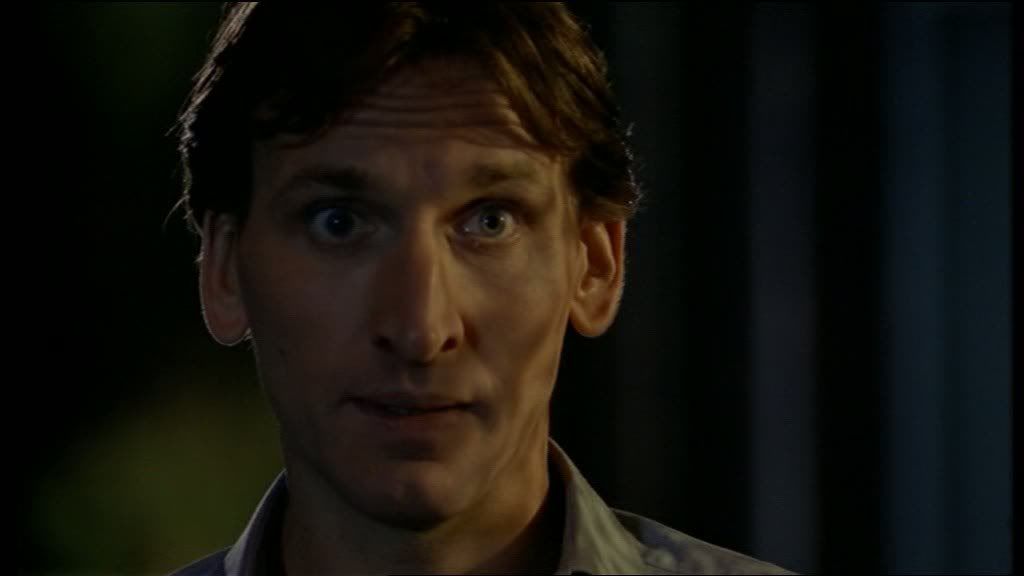
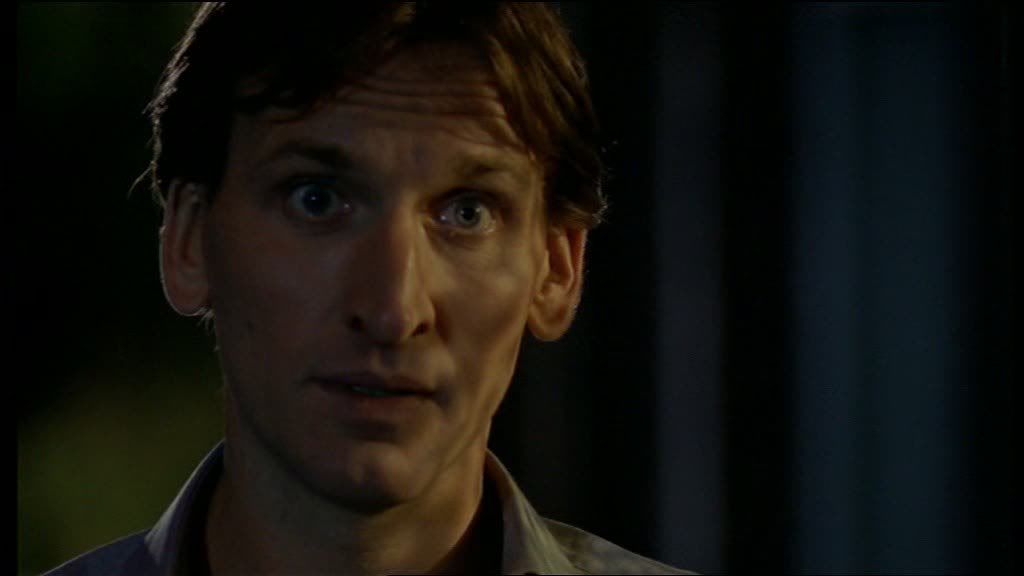
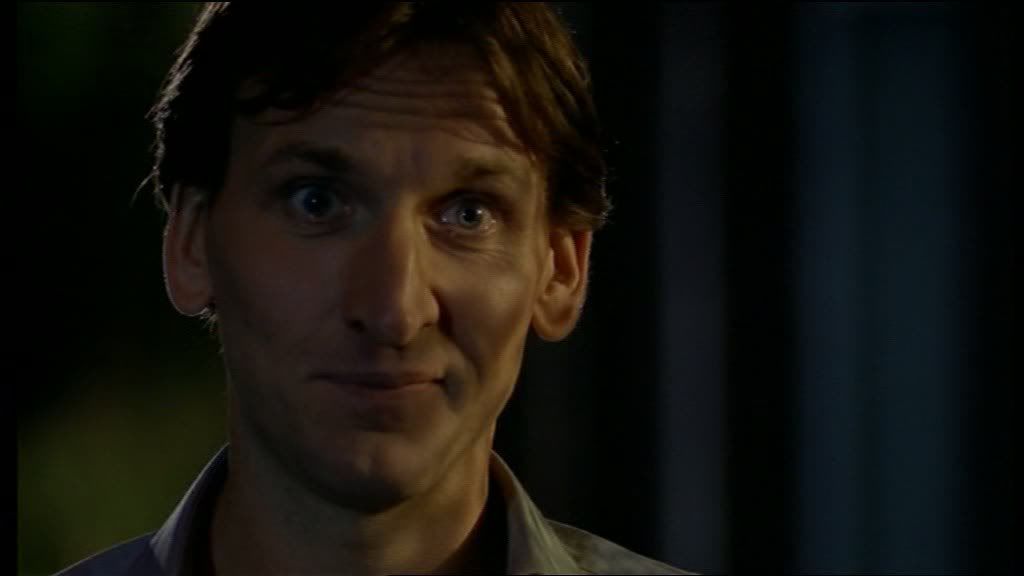
Showing posts with label thought control. Show all posts

Thought Control - #8 - Jude

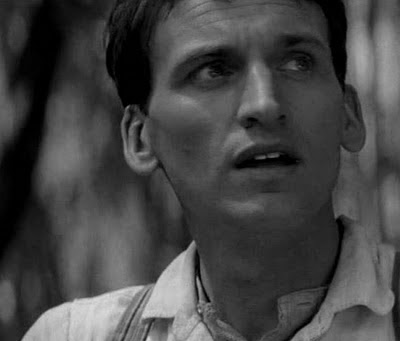
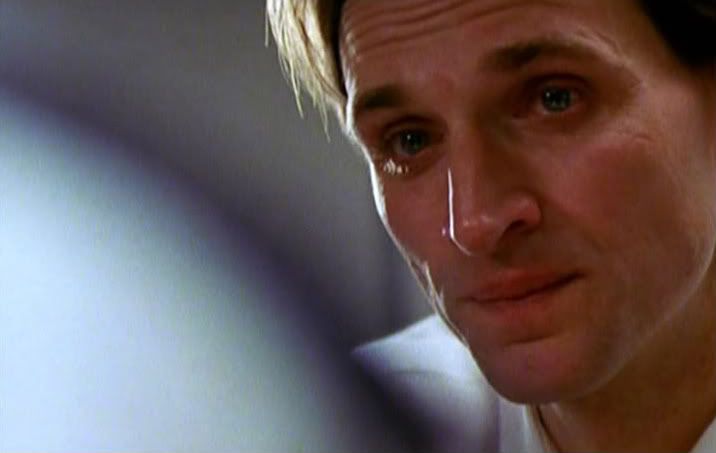
thought control logoClosing the door on this session of Thought Control, let's look at what could also be called a sort of threshold film,

Jude
Michael Winterbottom's feature from 1996, Hossein Amini's adaptation of the book 'Jude the Obscure' by Thomas Hardy.

The Cincinnati Post said in 1997, "Jude (Christopher Eccleston) and Sue Brideshead (Kate Winslet) attempt to transcend a false and rigid morality, only to be ground down as much by their own flaws as by the forces arrayed against them. Still, we can find something heroic in their passionate failure. [...] To fall back on an ancient and useful distinction, 'Jude' achieves pathos rather than tragedy. The characters seem more victims of circumstance than of their own uncompromising natures. Yet the tale's overall impact is undiminished. 'Jude,' as beautiful as it is desolating, blows from the screen like a first gust of winter."

The Washington Times review (1996) noted, "Mr. Winterbottom's harrowing 'Jude' is more in the nature of a barebones adaptation, but the skeleton proves adequate to the book's burden of fatalistic struggle and heartbreak. The principal cast member, Christopher Eccleston, achieves a particularly stirring embodiment of the title character after inheriting the role from a pair of juvenile actors and shouldering its weight to the bitter end. A lean, craggy young spellbinder, Mr. Eccleston seems to grow more persuasive and even commanding in the role as Jude painfully matures and endures."

Chicago Sun-Times (1996) called it a "grim weeper", and pondered, "Only the energy of the leading actors and the glory of the photography rescue the film from the slough of despond - and in a way, Hardy might have thought, that's cheating. [...] What was Hardy arguing in his novel? Many of his books were about ordinary working-class people whose best efforts were not enough to escape the trap set for them by society. They labored, they dreamed, and the establishment slapped them down like troublesome flies. Despite the fact that Hardy was writing at a time when a socialist critique of his society was being fashioned, he doesn't seem to have a political message: Hardy was not a reformer but a mourner."

Jude and Sue are sometimes described as being born ahead of their time. Were they to live in the world of today, would they really fare better - or perhaps worse?

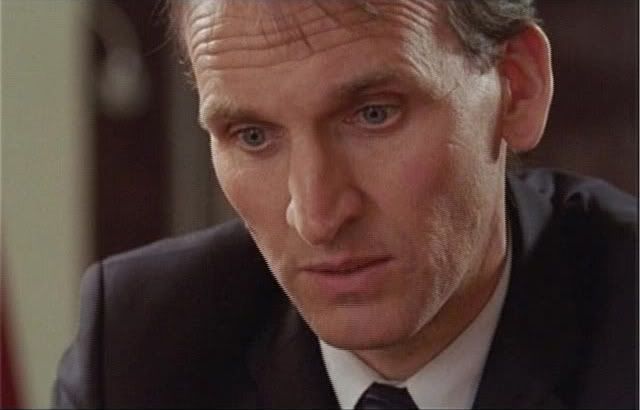
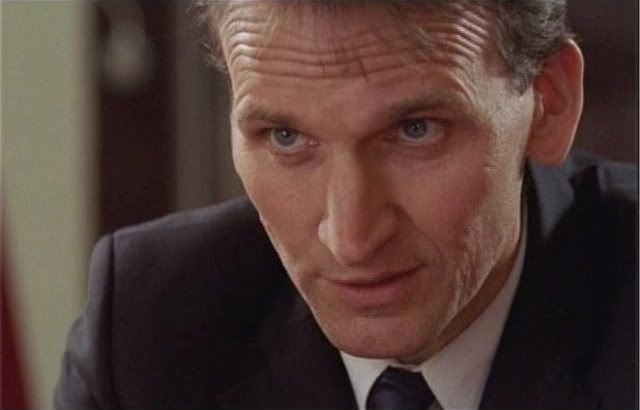
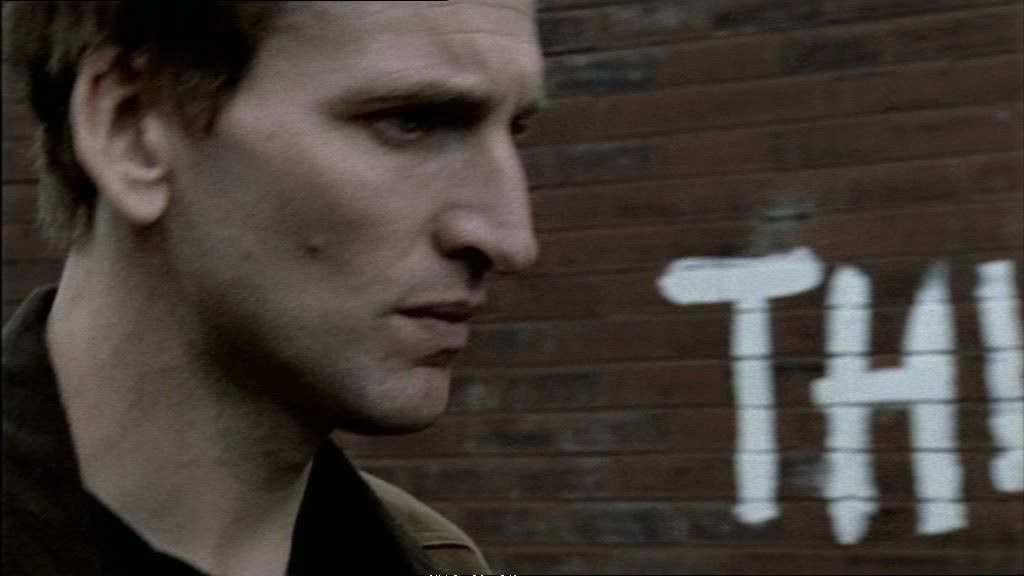
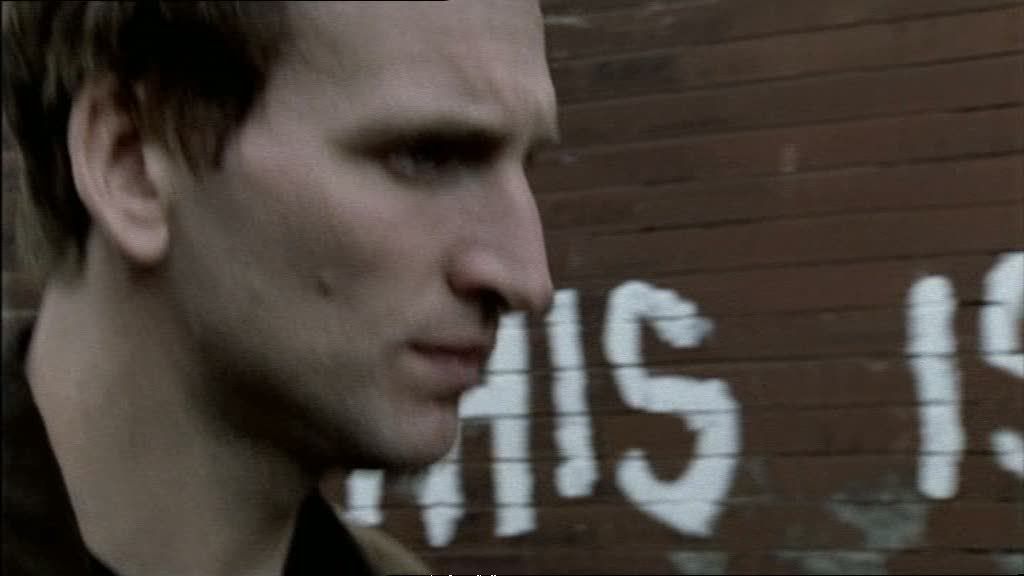
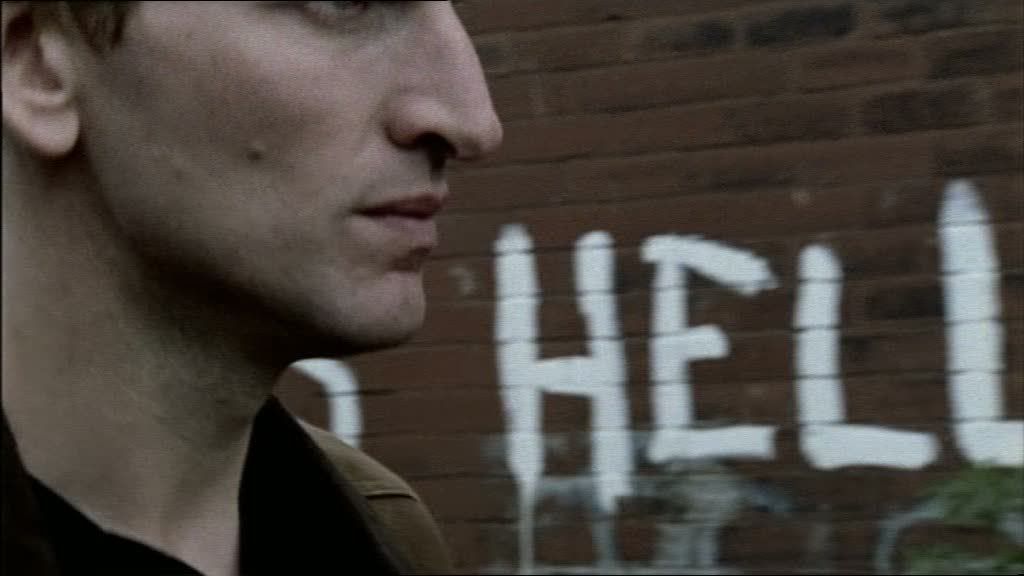
jude
2010-05-14
Thought Control - Information III

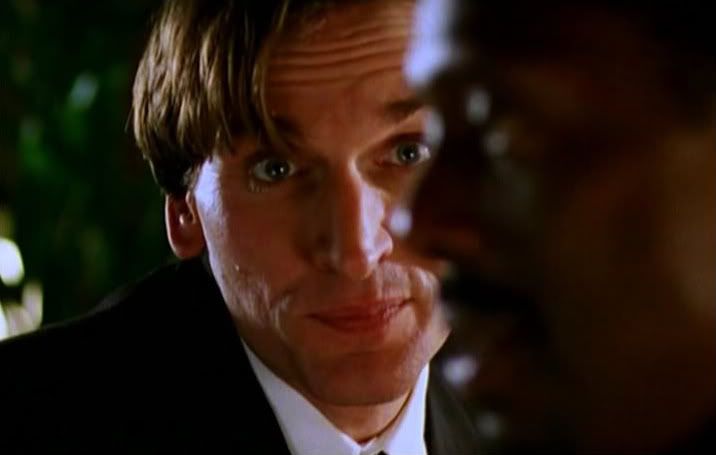
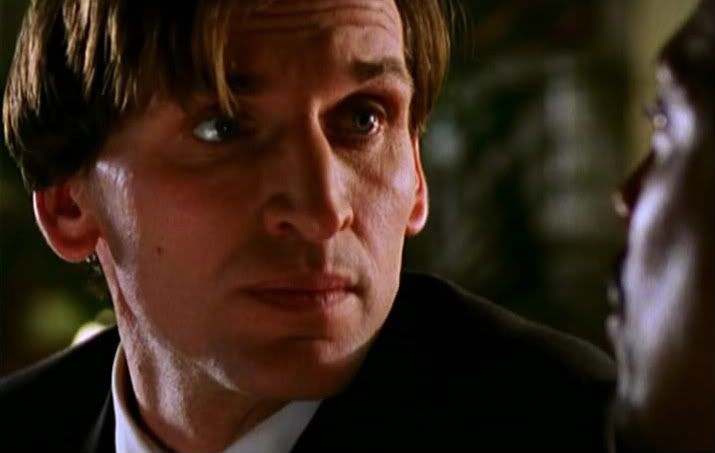
eccleston as zunz eccleston as jude
Previous topic dealt with 'Death and the Compass', and it's never too late to comment - feel free to browse through the older editions as well. Coming next is a question regarding 'Jude'. This issue will conclude both Volume Two and current discussion session. Thank you to all who showed up.

Thought Control - #7 - Death And The Compass

thought control logo
Christopher Eccleston's career start had two sides: One that was traditional for most newcomers ('Casualty', Morse and Poirot) and the other that was very less so. Definite highlight from the latter is

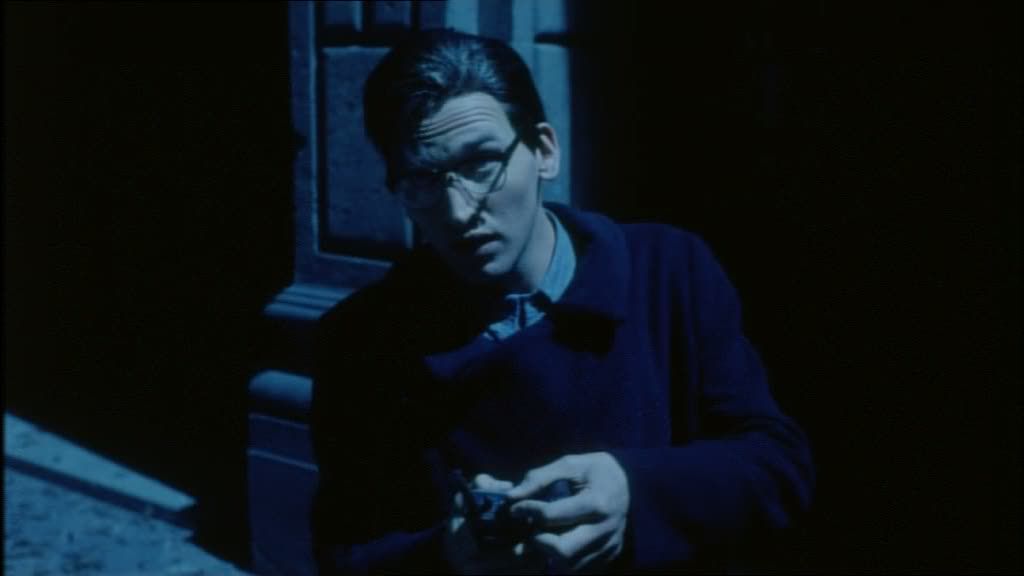
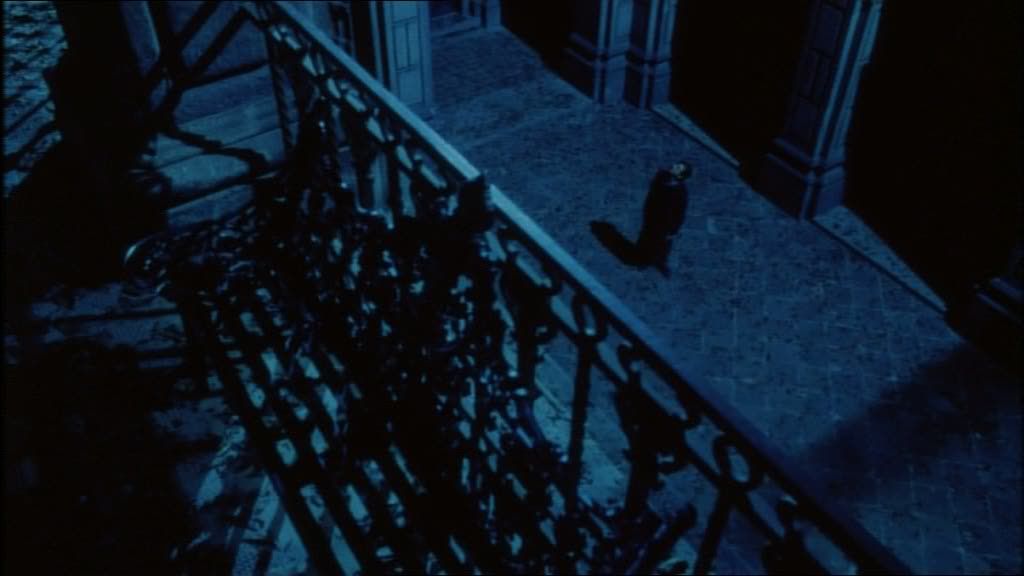
Death and the Compass
Originally a TV film from 1992, it was expanded to full feature format in 1995. Based on Jorge Luis Borges short story and directed by Alex Cox.

Eccleston plays quite a multifaceted role, a triad of characters; relationship between them and also with other personae in the film could become extremely complicated, depending on the certain viewer's approach. The film differs from other director's endeavours, because of its clean-cut style and tightness of the narrative as well as presentation - still never loosing the specifics of Borges' Byzantine world.

One-of film, a unique performance, and yet, 'Death and the Compass' is absent from practically all Eccleston's filmography shortlists, and rarely mentioned. Is there a particular reason for this omission? Does the film deserve better or are the things as they should be? What in your opinion is this film's place?

eccleston in datc eccleston in datc eccleston in datc

2010-05-01


Thought Control - Interlude V

strumpet death and the compass
Last week's topic with 'Strumpet' as a case still needs your thoughts. Next, to the South Side, with 'Death and the Compass'.

Thought Control - #6 - Strumpet

thought control logoIn previous discussions storylines, actor's role in production, genre choices and character features have been brought up. This time, let's look at certain type of roles, such as in

Strumpet
TV film which was also shown at Edinburgh Film Festival (2001). Written by Jim Cartwright and directed by Danny Boyle.

Christopher Eccleston plays Strayman, an alternative poet with a penchant for adopting strays. Upon meeting a homeless girl who gets the name Strumpet - and his words meeting her music, - they make for a breakthrough only to get entangled in show industry's monetary stratagems.

While their hit certainly lingers in the ears, it is especially the very beginning of the film that introduces the film's platform. Strayman recites a poem during a standard karaoke night at a pub. Danny Boyle commented on the scene: "I have to say that for Chris Eccleston and myself, the start of Strumpet, where we have him delivering John Cooper Clarke's Evidently Chickentown to a pub full of ordinary local people who were hearing it for the first time, that was a bit of a milestone in both our lives. We both come from the same background, we both feel the same way about Cooper Clarke. To have Chris driving that through in honour of him was just a great way of celebrating street life and street beauty and achievement. Really, that scene's a pinnacle for me."

Despite long-lived aspirations to appear in a Ken Loach film (the director has apparently maintained Eccleston got enough work without him), Strayman is the only Chris Eccleston's role where he is playing a contemporary person not just down, but quite off the ladder of society (not counting Boethius who's more of a phenomenon than a character).

How come?

eccleston as strayman eccleston as strayman eccleston as strayman

2010-04-13


Thought Control - Interlude IV

eccleston in othello eccleston in strumpet
Last week's topic focused on racism and Chris Eccleston's Ben Jago in 'Othello'. Next week an attempt will be made to give 'Strumpet' a slightly different context.

Thought Control - #5 - Othello

thought control logoLet's start Volume Two with a film that is somewhat sporadically available, but the effort to trace it is well worth it. Arguably, one of the best villains hails from

Othello
Shown in 2001, TV film, directed by Geoffrey Sax, Andrew Davies' modern take on William Shakespeare's tragedy.

Christopher Eccleston plays the character of Iago, here Ben Jago (a role he'd been offered once by The Royal Shakespeare Company, but had to decline due to other commitments).

In the film, the action is transplanted from historical Venice to current-day London, where two high-rank policemen's, John Othello and Ben Jago's paths clash spectacularly on the board of political games.

In a 2001 pre-première interview with Marion McMullen Eccleston commented on Jago: "I think there is a malign and destructive side to all of us, but by and large we keep it under control." [on what drives Ben Jago] "I wanted it to be a compulsion to destroy, because he's not entirely sure why he does it. He is incapable of intimacy which makes him invulnerable. He has great control over himself, but also absolutely no control either - he's completely contradictory. I wanted the audience to look for regret, but see none."

Ben Jago shuns no means digging a wolftrap for his 'frenemy' and suddenly his superior Othello, the first black commissioner of the Metropolitan Police. Aside from pulling various threads inside the institution, Jago, not unlike the politicians behind the castling in the force, uses the race card. While his so-non-PC rant, reacting to the news, could be discounted as mere enraged raving - and is indeed qualified soon after by Jago himself as a 'passionate performance', there's little ambiguity for example around him networking online, throwing biscuits to white supremacists.

In the Production Notes (based on the same session of interviews as above) screenwriter Davies comments that "Jago discovers he does have racial feelings after all" first when he's wronged by Othello's promotion. Eccleston disagrees: "I don't think Jago is a racist. I think it's much more likely that he is a man thwarted in love. Othello's love for Dessie adds as much fuel to his hatred as does the colour of Othello's skin. I think he's seen white men whip themselves into a frenzy about their hatred for black people and he uses that on himself and on us. But I don't think it is the deciding thing ... Jago's too bright to be a racist."

Where do you find yourself in this discussion?

jago from othello jago from othello jago from othello

2010-03-26

Thought Control - Interlude III

eccleston in perfect parents eccleston in othello
There's still time to add a word or two about 'Perfect Parents'. Next week, Volume Two schedule says, 'Othello'.

- - - - - - - - -

Because of recent low turnout, we'd like to know why you pass a particular discussion up: Not your favourite film, not a film you've seen, irrelevant question, something entirely else? Remember you can always respond in negative - offer a completely different take - raise a problematic we've overlooked. Most importantly, we're here for you, so shape us, please!

Thought Control - #4 - Perfect Parents

thought control logoReturning to the theme of religion that started Thought Control session, the first project from the post-'Doctor Who' era,

Perfect Parents
TV film from 2006, directed and written by Joe Ahearne.

Chris Eccleston plays Stuart, a father who wishes all the best for his daughter, but his actions start an avalanche of disastrous events. For this role Eccleston won Best Actor at Rome Fiction Fest 2007 (See Timeline).

Eccleston and Ahearne met filming 'Doctor Who', and already in 2005 they were supposed to shoot a film together. The feature was called 'Double Life' and billed as (probably sci-fi) romcom, but it fell through late in pre-production. The project was abandoned completely, and Joe Ahearne set to writing a new script. Eccleston's casting was confirmed in April 2006, and 'Perfect Parents' aired during Christmas holiday same year.

The story evolves from real-life fact that a certain percentage of non-religious parents cheat in order to get their children into better - and strictly Catholic - schools. Writer and director Ahearne doesn't stop at this, among other things, he includes a priest with dubious past and looks behind the façade of said schools.

While it is possible to see it in broader terms than all-out criticism of religion, paradoxically, all the while dealing with approximately relevant, non-fictitious topic, the film quickly departs from reality as the action progresses.

Seen from one side, this is merely a blunt dial-a-controversy - that makes little use of, for example, well-crafted depiction of family life, and fails its characters with wobbly logic. From the other, the film might have an aim outside itself - but does the story bear enough in it to feed a discussion and not appear simply sermonizing?


stuart from perfect parents stuart from perfect parents stuart from perfect parents

2010-03-13

Thought Control - Information II

eccleston in clocking off eccleston in perfect parents
Last week's topic - 'Clocking Off'. Coming next week, 'Perfect Parents', final issue of Volume One.

- - - - - - - - -

Volume Two


Week 12 - 'Othello'
Week 15 - 'Strumpet'
Week 17 - 'Death and the Compass'
Week 19 - 'Jude'

Thought Control - #3 - Clocking Off

thought control logoThe end of the 90's - very beginning of the Noughties was a period of many colours, that produced a batch of very different projects. Let's look at the specific department of 'With or Without You', 'Linda Green' and the truly representative and probably best known of them,

Clocking Off
BBC series, directed by Geoffrey Sax and written by Paul Abbott, was shown in the year 2000.

Chris Eccleston appeared in the first season's second episode (plus a surplus blink-and-you-miss-it moment of the fourth). His airport runway controller Jim Calvert is a bit of a lad - but his life changes, first with a heroic deed, then, an act of charity and finally love.

For Eccleston the end of the 90's meant a restart after an undeservedly empty year - which followed, inexplicably, the first real high of his career. Restart brought roles in films of probably every imaginable kind: Quirky indies, blockbusters, romcoms. The last category is interesting, because while the themes were also there before, it was first during this period that social problematic was more or less completely divorced from the characters.

At the time Chris Eccleston said, "I'm certainly not complaining about the roles I've had. But I've done a lot of heavy drama and I wanted to play something that was lighter, and I thought this was well-written." Or as he half-joked in another interview: "The movers and shakers of Soho have me pigeon-holed as a class-avenging lout," he sighs. "But that's not fair. I've reread Jude and looked in vain for opportunities to introduce custard-pies. That's why it was lovely for once not to have a father who hated me or children trying to kill themselves in 'Clocking Off'. It was a nice change to play a bit of a loon, a daft lad."

Responsible for the writing was Paul Abbott whom Eccleston knew from 'Cracker' (as producer for 'To Be A Somebody) - and after 'Clocking Off' went on to guest-star in the first episode of Abbott's less successful affair 'Linda Green' (2001). The one feature film of this genre was also a result of repeated collaboration, with 'Jude' director Michael Winterbottom - 'With or Without You' (1999), a film which is remarkable for its warmth and lack of cynicism.

Is this genre choice just a statistical, automated outcome of that certain time, filled with oscillations, or could it have been a possible career direction - and what would have happened if it were?

One thing is certain - Eccleston didn't have any trouble with these lighter characters. While there might be fewer things to discover in them and with them, absence or minimum of heaviness doesn't mean lower quality of the product. Maybe it would be easier to find films in this direction?

jim from clocking off jim from clocking off jim from clocking off

2010-02-24

Thought Control - Interlude II

eccleston in let him have it eccleston in clocking off
Last week's topic on 'Let Him Have It' is not yet exhausted, and there's still time before the third issue of Thought Control.

Coming up next week, another Chris Eccleston films related question, schedule says it will have something to do with 'Clocking Off'.

Thought Control - #2 - Let Him Have It

thought control logo
Chris said he owed his loyalty to Derek not to Peter Medak.
'If you're borrowing the drama of epilepsy you have to show the reality. But Hollywood doesn't like ugliness.'


(From Iris Bentley's book Let Him Have Justice, read relevant extracts here on the blog)

Let Him Have It
Vivid Entertainment movie, premièred at Toronto Film Festival in 1991; written by Neal Purvis and Robert Wade, directed by Peter Medak.

Christopher Eccleston plays Derek Bentley (30 Jun 1933 - 28 Jan 1953), mentally disabled youth, convicted and hanged for a murder he didn't commit. He was fully pardoned first in 1998 (read an article).


The production originally started with Alex Cox at the helm. Cox cast Eccleston (as Bentley) and Paul Reynolds (as Craig) with the intent of making a truthful film, in b/w. I. Bentley: "But it turned out his ideas were a bit too revolutionary and before long he fell out with the producers." Cox was replaced by Medak, film took on a different direction and both Eccleston and Reynolds had to re-audition.

Initially satisfied with film's message (it did bring the case back to light), Eccleston soon discovered changes that had been introduced, and how the reality was glossed over. He spent a month visiting Lingfield Hospital School in Surrey, where he found out about the specifics of epilepsy and learning disability Derek suffered from. He was further encouraged by Derek's sister, Iris Bentley, who was supposed to be a consultant for the film, but was rarely listened to. In her frank and poignant book she lists various discrepancies, from trivial to fundamental ones.

Still, this is a feature film, not a documentary, and in theory, the director's - audacious or not, artistic or market guided - vision. A restless actor - is it a hindrance or a gift for a production?

derek from let him have it derek from let him have it derek from let him have it

2010-02-10

Thought Control - Interlude

eccleston in the second coming eccleston in let him have it
Thank you to everyone who showed up for the first issue of Thought Control. Nice one. You still have time to add a thought or two about 'The Second Coming' and/or related questions.

Next week, keeping to the schedule, 'Let Him Have It'. See you there for another off-road discussion.

Thought Control - #1 - The Second Coming

thought control logoUnlike previous discussions, Thought Control presents a question based on a different film each time. See the schedule for the first volume.
There aren't any special rules. Both elaborate ideas and fleeting thoughts are equally fantastic, and equally encouraged - the only requirement for you is:
Please ask your fellow disputants further questions!

Let's start with:

The Second Coming
Shown on ITV in 2003, produced by Red Production Company, it is written by Russell T Davies and directed by Adrian Sherhold.

Chris Eccleston plays Steve Baxter, a random bloke, born and braised in Manchester, who is The Second Coming, the Son of God. He delivers an ultimatum for humanity - they have to choose, write the Third Testament or face Armageddon.

So, without pointing at specific religions, and apart from separate characters' fate, consider the new world. In your opinion, is it a happy or a worrying ending?

steve from the second coming steve from the second coming steve from the second coming

2010-01-27

Thought Control - Information

thought control logo
ATBN would like to introduce Thought Control, fortnightly discussions anchored in one film/series at a time, with questions regarding general problematic, creative choices and solutions, character specifics or other aspects of selected Christopher Eccleston titles.

In order to give you time for preparations - refresh your memory or maybe watch something you've not yet seen? - here's the schedule for the first volume:

Week 4 - 'The Second Coming'
Week 6 - 'Let Him Have It'
Week 8 - 'Clocking Off'
Week 10 - 'Perfect Parents'

The first TC post proper - already next week. See you there.

2010