CE Films - Part 8 - 1999-2000


PART 7

HEART

6 May 1999
Film | Dir. Charles McDougall | Wr. Jimmy McGovern
Role: Gary Ellis (pilot).

Video example - Gallery - IMDb - Get: Region 1, Region 2

Alex: "One more member of the 'good intentions pave the road to hell' club (which for me consists of 'A Price Above Rubies', this and a couple other films that will be reviewed later). This time, we have a good creative team and cast, but the story itself is already suspicious, and where the film loses me, is its overall tone and narrative presentation, weakened by some mechanical suspense building.

"'Heart' is about a morbidly jealous Gary, his wife Tess who is good at feeding his suspicions, and Gary's heart transplant operation. He finds donor's increasingly deranged mother who takes up stalking the couple. All characters are decidedly abominable, and while I'm normally perturbed by the hapless characters' fates, this time I – perhaps perversely – cheered Gary on (it's one of the toughest endings of all CE films).

"It felt though as if there was some kind of meta level, narrative exemplified what author wanted to do with his creations. The penultimate scenes were the best in the film, even managing an acerbic social commentary, but the final ones destroyed this impression, returning to dial-a-twist – when the punch isn't enough to knock you unconscious, you're bound to notice the papier-mâché nature of the scenery.

"Film's attempts at humour and sordidness missed me by a mile, and somehow I believe I could've probably been satisfied with writing this film off as a moderate attempt at psycho-drama without them. You glimpse the story that could've been powerful – especially if it pursued the analysis of social and moral questions it touches, instead of what you only could call deliberate aspiration to degrade itself to a B-movie.

"It's not captivating/gruesome enough to be a plain horror story either, it's just repulsive (and I don't mean queasy, though it is graphic in all aspects). A great big 'eh?' it is now, and while I understand what the creators wanted to tell, I cannot see why I should be willing to experience this story. Oh yes, because CE is beyond convincing – but that's the problem."
 

Conclusion: Avoid, unless you're of 'what-doesn't-kill-you' kind. 

DVD Notes:
2002 "Spartan" All Regions (sold as Region 1; check with seller). Spanish subtitles. Extras: Filmographies.


WITH OR WITHOUT YOU
3 Sept 1999 (Venice Film Festival)
Film | Dir. Michael Winterbottom | Wr. John Forte
Role: Vincent Boyd (husband).

Video example - Gallery - IMDb - Get: Region 2 USA, UK

Alex: "A film, watching of which I've been postponing as long as possible, so frightened I was by its genre and themes. And when I finally saw it, I found it's indeed a rom-com. It's about a couple: They're desperate to conceive a child, and experience various troubles both at home and at work, especially when certain individuals from their past get involved.

"And I found that I have nothing against it, despite not sharing the ideas expressed in it or with it. It didn't irk me: It's well made for its genre and rather funny (characters are shown sympathetically, with soft irony, and humour isn't automatic). This film perhaps won't change your life, but it won't ruin an evening in either.

"I liked its visual side, it supported the mood and gave the story a very homogeneous feel. Characters were interesting, easy to follow, and there's also the local problematic (protestant/catholic, f. ex.).

"While the film itself is slightly unusual for CE, Vincent is not that far away from the men he played before; a man's man, who prefers to go and tinker with his car instead of braving an honest conversation with his wife. He's also bitter that he gave up his job as a police officer, and sees himself as a sort of failure, and childlessness is obviously not helping."


Conclusion: Worthwhile easy-watching, could be recommended because of, among other nicely random reasons, the northern Irish accent, which suits CE and his character very well, or, for example, the boy racer sequence. For once, a feel-good (eventually) film. 

DVD Notes:
2008 "Film4" Region 2. English HOH subtitles. Extras: Interviews w/ the cast; Making-Of (CE featured); Theatrical trailer.

 
Watch: CE interview, making-of, trail


THE TYRE
2000
Short film | Dir. Brian Hill | Wr. Simon Armitage & Brian Hill
Role: Salesman.

Video example - Gallery - IMDb - N/A

"A stressed out salesman regains his self-esteem when he loses his car's spare tyre in a valley." [Film4]

"Based on a poem* by Simon Armitage. A sales rep feels trapped by his life. During a business trip that takes him through his hometown, his car has a puncture. Whilst replacing the wheel, the salesman loses control of the spare down a hill, and the childhood memory of an unstoppable tractor tyre is triggered."

Winner of the 15th Leeds International Film Festival first Yorkshire Film Award, 2001. More info: Century Films.

* Read the poem. Trivia: It was intended to be included in a compilation honouring Ted Hughes, but Armitage ran out of time, and sent it to Hughes, the poet who'd inspired him, separately. "Very good story," was the verdict. [p. 682, 'Letters of Ted Hughes', ed. Christopher Reid] 


KILLING TIME
1 Jan 2000
TV film | Dir. Brian Hill | Wr. Simon Armitage (poem)
Role: Millennium Man.

Video example - Gallery - IMDb - N/A

"Feature-length film of Simon Armitage's 1000-line millennium poem of the same name, broadcast on New Year's Day, 2000.

"Mixing documentary, drama and poetry, we follow a 'millennium man' as he roams the country, meeting real people and collecting millennial offerings, things that people have jettisoned to begin a new life.

"We meet a former IRA man who has renounced violence, a terminal cancer patient who is throwing away a pair of running shoes, a bankrupt farmer throwing away beef on the bone, a man entering the priesthood, a man about to become a woman and a woman about to have a baby.

"Meanwhile, Armitage's epic poem narrates the many grim events of recent years, the Columbine high school shootings, the Paddington rail crash, the London nail-bombings. Familiar stories and images are recast as surreal events reflecting an age of cynicism, materiality and media overload.

"Themes of transition, death and birth, at once painful and liberating are explored in this unique and acclaimed film." [Century Films] 


CLOCKING OFF
30 Jan 2000
TV series | Dir. Geoffrey Sax | Wr. Paul Abbott
S. 1, ep. 2: 'Fire' (aka 'Yvonne's Story'); ep. 4: 'Steve's Story'
Role: Jim Calvert (bachelor airport worker).


Video example - Gallery - IMDb - Get: USA A, B, UK

Alex: "Continuing the varieté, this is a rather enjoyable series that boasts both an acclaimed writer and extensive starry cast, which includes John Simm, Philip Glenister, Sarah Lancashire and Lesley Sharp. Jim is a character from the second episode and reappears for a blink in the fourth. What is specific for the series is a combination of mostly down-to-earth themes (it centres around a factory in Manchester) and very acute, sleek style. It leaves the impression of good handiwork, and if a story works, there's nothing to impede it."

Chiclit: "Chris plays an airport runway controller – and we meet him in a heroic moment when he rescues the daughter of a neighbor from a fire. Next thing you know he is hosting the neighbor Yvonne and her children in his house while they find a place to live. We find out, as do his new housemates, that he has a good job at the airport, dates hot and cold running air hostesses and he's neat and organized.

"He discovers what's missing in his life as he spends time in proximity to the messy reality that is a family. I am still not one hundred percent sure he loves the Sarah Lancashire character (Yvonne) as much as loves the idea of her and playing Dad. I would not call this his most introspective role, but again its one of the more subtle and happy performances I have seen him give."

A: "There isn't much for CE to do – Jim is a bit shallow, and, in my eyes, he isn't fully developed as a character, because the surfacing duality of his preferences in life isn't grounded at all – universal self-confidence isn't enough – and stays merely technical."
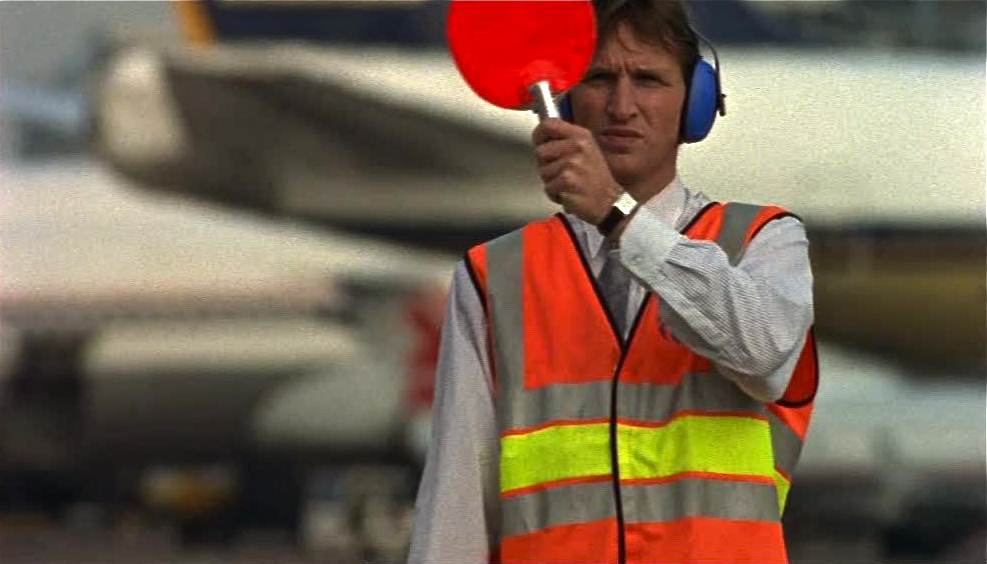
C: "It's actually a more upbeat role for Chris – no real angst or intensity. It's probably one of his more mainstream, accessible performances – it would probably be good for someone who doesn't know a lot of his other work, or is not sure they are ready for some of his darker, more intense material. In fact, it makes you wonder if Chris had been drawn to more parts like this one, how his career might have ended up very differently. Overall the series is well cast with familiar British actors and it's a very compelling slice of middle class life centered around a textile factory."


Conclusion: A good series, a fun character. 

DVD Notes:
2004 "inD" All Regions (The Complete First Series). No subtitles. Extras: Photo gallery (CE image 1 see above, image 2 here); Episode synopses; Cast & crew bios (read here).


PART 9

CE Films - Part 7 - 1998-1999


PART 6

A PRICE ABOVE RUBIES

22 Jan 1998 (Sundance Film Festival)
Film | Dir. & wr. Boaz Yakin
Role: Sender Horowitz (businessman).

Video example - Gallery - IMDb - Get: Region 1, Region 2

Chiclit: "A good effort by Harvey Weinstein to get Oscars, but it didn't work. It seems to me that it was perhaps a great idea for a film in concept (Weinstein probably hoped it would be the next 'English Patient', Renee Zellweger, etc.), but it fell short for me. Chris was as good as he could be in that film, I think he did as much as was humanely possible with what he was given, and I enjoyed his performance – he is the most charismatic and compelling thing about the movie, and definitely sparks with Zellweger."

Alex: "This is a story of a young woman, married to a Jewish scholar, and encountering both the limitations of her status in their closed society in New York and the traps on the road to her breakthrough. It's clearly a niche film, good as such, perhaps not just a melodrama with ambitions, but unluckily incapable of anything more. It tells its story, but is prevented from reaching out, feels very technical – an experience here and now, but it won't necessarily stir your mind."

C: "I found it difficult to identify with Zellweger's character – Sonia just seemed mentally ill at the first part of the movie (and I know that it was meant to be a feminist movie, so that wasn't the intention, but since I had no info about how or why she married, moved to NY, what the relationship with the husband had been prior to the birth of her child, I had no way to determine if she had been this way all her life and never wanted to get married, or was suffering from post-partum depression).

"I also felt that exploring a little more about why Chris's character could be morally ambiguous, and the devout family didn't seem to know or notice, would have been helpful – how did that happen? He is (again with the duality, the less than moral brother-in-law/family leader) contrasting with Sonia's religious husband. Did Sender care for Zellweger's character more than we knew? I felt Chris was trying to express his admiration for her without admitting too much."

A: "Sender acknowledged Sonia more than anybody else, saw her flair and potential, but at the same time treated her as his property. And in this lies one more duality, where reality twists the initially positive things like cultural tradition into a petri dish for selfishness and abuse. You cannot simply label Sender as a villain, a black sheep, though. It is possible to see him as a trigger for progressive development in their society. These levels, surrounding Sender, are the most original, a bit shady sometimes, but much more preferable than other characters' predictable strata."

C: "In the end, Chris's character is the catalyst for change in the movie, for propelling the story forward at a point where I, at the same time as respecting her worth and talent, was becoming very weary of the Zellweger’s character's craziness. Chris strikes sparks with Renee Zellweger that the other actors don't, and it ends up being a compelling realistic performance. There are facial hair and accent issues to overcome in this movie, but all in all well worth it."

Conclusion: Peculiar film with a not widely explored subject.

DVD Notes:
2004 "DFW" (Dutch). Dutch subtitles. Extras: R. Zellweger bio, filmography, mini photo gallery.


ELIZABETH
8 Sept 1998 (Venice Film Festival)
Film | Dir. Shekhar Kapur | Wr. Michael Hirst
Role: Duke of Norfolk.

Video example - Gallery - IMDb - Get: Region 1, Region 2
   
Chiclit: "Chris as the Duke of Norfolk, with an upper-class northern accent. The film is excellent overall and it's a pleasure to watch Chris working with the likes of Cate Blanchett and Geoffrey Rush, as he can bring the full power of his acting to surface without worrying about tipping the balance of the scene and overpowering his co-stars, or the scenery. He plays a character quite jealous and watchful of the Queen, and you can almost see the emotion rising off him and seeping out his pores. There is no ambiguity about this character – he wishes the Queen, his rival, dead and ultimately underestimates her."

Alex: "Norfolk was cast against the type, and very successfully – he easily stands out among other characters, not least because of the deliberately chosen type of performance. The film itself is often ousted as bending the historical truth, but I don't think it should prevent anyone from enjoying it – it's both beautifully shot and entertaining."

Conclusion: Good period drama.

DVD Notes:
2007 "Universal Pictures" Multi Region (The Golden Edition). English or French soundtrack, English SDH subtitles + 9 other languages. Extras: Commentary by director Sh. Kapur; 'The Making Of Elizabeth'; 'Golden Age' sneak peek; Theatrical trailer; Photo gallery.


Watch: brief CE interview


EXISTENZ
16 Feb 1999
Film | Dir. & wr. David Cronenberg
Role: Seminar leader.

Video example - Gallery - IMDb - Get: Region 1, Region 2
   
Alex: "Cronenberg's attempt at cross-breeding games, virtual reality and film is a convoluted affair. And I say this as his fan. Immediately the concept is really interesting, but then it doesn't keep its promise.

"Seminar leader has two scenes at the game's presentation – the briefness of his appearance is explained, perhaps almost self-ironically from Cronenberg's side
– but there's really nothing to write home about."

Conclusion: Obscure cameo role – not something you should watch the film for.

DVD Notes:
1999 "Momentum Pictures" Region 2. English HOH subtitles. Extras: Commentaries by D. Cronenberg, Director of photography and Visual & special effects supervisor; FX documentary; Theatrical trailer.


PART 8
 

CE Films - Part 6 - 1996


PART 5


JUDE
10 Sept 1996 (Toronto Film Festival)
Film | Dir. Michael Winterbottom | Wr. Thomas Hardy (novel) & Hossein Amini
Role: Jude Fawley (stonemason, autodidact).


Video example - Gallery - IMDb - Get: Region 1, Region 2
 
Alex: "Let's not cover it in cotton-wool. 'Jude' was a flop. The funny thing is though that there is nothing wrong with the film. It has the cast, the story, the cinematography. In different space and time I can easily see it getting an Oscar. Perhaps not my favourite, but it is very viewable.

"This is a story of a self-educated man, a stonemason, who tries to break class boundaries and become a scholar. There are other boundaries restricting him – those of an unhappy marriage and later love for his cousin Sue. Jude's and her relationship defies the rules of the society – but the backlash is only one of the forces that tears their souls to pieces.

"It's a bleak film, not least in its message, and most probably won't raise your spirits. I wouldn't say this is the reason why it didn't find its audience, because the two main characters Jude and Sue (Kate Winslet) are interesting and involving; it's easy to see their motivation, understand their struggles – even if and because you are watching from your present-day situation, I think.

"Despite it being an adaptation of a novel ('Jude the Obscure' by Thomas Hardy, from 1895), cinematography brings the film up to date, and there is a certain feel that doesn't let you call it just another period drama. (It was a harrowing experience for the actors as well, like for the heaviest scene, as Eccleston has said, there were done 11 takes – for different nuances of reaction.)


"Suppose a struggle against one's class might earn a raised eyebrow in the modern globalized society, but it's more than obvious that people are still fighting the same prejudices as Jude and Sue did: Dreaming against the norms and forms, getting ruined – inwardly or outwardly – by eventual failures.

"Depending on your outlook, this film is either a dystopia or merely picturing the reality. Still, it's worth viewing, it doesn't do feeling warm and cosy all the time."


Conclusion: Demanding, yet recommended one.

DVD Notes:
2000 "Universal Pictures" Region 2. English HOH subtitles. Extras: A trailer.


HILLSBOROUGH
5 Dec 1996
TV film | Dir. Charles McDougall | Wr. Jimmy McGovern
Role: Trevor Hicks (witness).

Video example - Gallery - IMDb - Get: Region 2
  
Alex: "This drama tells about the Hillsborough football disaster at the Sheffield stadium, where 96 Liverpool FC supporters lost their lives, – as experienced by some of the families. The cause of the tragedy was eventually established as mistakes or negligence from the police officers and stadium stewards' side. The film, made when there was still some ambiguity in the case, clears up the facts and also touches upon the denigration of the fans by the press.

"Trevor Hicks is a father who lost his two daughters in the disaster, and lost more after it. A steady and systematic man, he tries to cope with the situation by taking up the fight to have the causes named and the culprits brought to justice. But his family life continues to fall apart.

"Showing him and other common people, accidentally caught up in this unfathomable tragedy, the film is compassionate, but at the same time relentless. It's not sentimental; it's not bloodthirsty either. The level of objectivity is remarkable, and it's one of the aspects that make this docudrama stand out.

"The film is a combination of characters' stories and documentary-like interviews with them, comprising seven parts. While during the original broadcast title cards bookended commercials, the separators have been kept, and their purpose is evident. These pauses accentuate the transition from one part of the narrative to another, for example, creating a bridge between the scenes of fans entering the stadium, and the scenes, which you arrive to mid-action, of the first people breaking out of their pen where they were being crushed, onto the pitch.

"All in all, 'Hillsborough' is an exceptional example of dramatized documentary. The cast is made of the finest British actors, and Hicks's portrayal, sincere and moving, is one of the key elements of the film.

"On the 15th of April 2009 it's twenty years [25 now] since Hillsborough. The case hasn't been closed yet, though."

Conclusion: Recommended.

DVD Notes:
See this post for the review.


CE Films - Part 5 - 1995-1996

SHALLOW GRAVE
6 Jan 1995
Film | Dir. Danny Boyle | Wr. John Hodge
Role: David Stephens (accountant).

Video example - Gallery - IMDb - Get: Region 1, Region 2
  
Chiclit: "Danny Boyle's big screen début. Part crime story and part psychological study. The narrative is like this: When the new roommate dies, the other three inhabitants of the flat find his suitcase, full of cash. Much plotting ensues to assure that they get to keep the money. I was quite interested to read that Boyle made the cast share living space while rehearsing for the movie.

"Anyway, when a new flatmate turns up dead – and they find a suitcase full of money – the fun commences. Christopher's character is very controlled – but from the very beginning there are hints towards the opposite – the way the other two roomies joke with him and mention his group therapy lets you know he is not completely one of them (also, he wears a suit and tie and leaves at the same time every morning – while the journalist works freelance and the doctor works nights). He is reluctant to take the money at first, but then, convinced he'd been a loser so far, he decides to take a risk and live a little."

Alex: "The change comes when he looks at his job and his daily routine from the side, and probably as a continuation of his (consciously developed?) striving to fall in with those people he emphatically calls 'friends'."

C: "Unfortunately he draws the short straw (I tend to think McGregor's character plans it that way, but not sure), when it comes to actual fulfilment of their plans. The controlled accountant quietly starts deteriorating. He takes to living in the crawl space, withdrawing mentally and physically."

A: "Together with the music, the imagery of this almost childlike figure sitting alone in the dark, flicking the torch on and off, etches into your mind.

"While the other two people are more or less transparent (and far from affable), it is the deformation of common David Stephens that draws your attention. He horrifies his friends even when they should be thankful. And still I'm tempted to stay on his side, not least because it was his crime-mates who technically unleashed the madness in him (and constructive madness is the most frightening of all). He's perhaps even a hero, albeit of a very wrong type."

C: "Chris is cool and scary in this role, slowly turning more and more crazy – you realize he has lost sight of who he is and becomes like an animal, lurking, crouching in the darkness. It’s done with subtlety, though, through the eyes and the body language – he never overdoes the crazy."

A: "Anachronisms and certain coldness or rawness of the sets also help to build the atmosphere, and lift it from being a standard gritty criminal drama. It has a subtle dream-like feel, or that of a tale, by having David as a narrator (it's only in the end that you realize what the close-ups of his face are really about) – instead of personalizing, it makes it more abstract – "
This could've been any city, they're all the same" – and at the same time pins it down as David's story."

Conclusion: A must.

C: "It's a highly entertaining, mainstream type film. Well thought of by many and certainly an early glimpse at some big talents – well worth watching, at least twice! (However, there is a lot of blood, etc. – and it's a bit dated, if you are fan of current police procedurals on TV, you have to let a little bit of knowledge go – I kept thinking about all the DNA they were leaving around.)"

A: "And if you're crushed, for you're suspecting this might not be your bowl of tea, do try another Danny Boyle's film 'Millions' first – it's 'Shallow Grave' for minors (loot & loft included)."


DVD Notes:
2009 "Film4" Region 2 (special edition). English HOH subtitles.
Extras: Commentary by D. Boyle; Behind-the-scenes 'Digging Your Own Grave'.
Available since 2012 as Criterion Collection special edition Region 1 DVD & Blu-ray (restored digital transfer; audio commentaries by D. Boyle and by J. Hodge; new interviews with CE, K. Fox, and E. McGregor; 'Digging Your Own Grave'; A. Macdonald and K. Macdonald's video diary; an essay by critic P. Kemp).

Watch: CE compilation from the BTS


HEARTS AND MINDS
16 Feb 1995
TV mini series | Dir. Stephen Whittaker | Wr. Jimmy McGovern
Role: Drew Mackenzie (teacher).

Video example - Gallery - IMDb - N/A 

Alex: "'Hearts and Minds' is a story about a young teacher, Drew Mackenzie, who asks to be assigned to a tough school in Liverpool. With neophyte's fervour he throws himself against the sickly educational system, and the decayed structure cannot hold him, instead it crashes right onto his head. Like in the story he reads for his class, Jacobs' 'The Monkey's Paw', all too soon he'll desperately need that third wish.

"Mackenzie teaches English, and in his first lesson he recites a traditional text that's used to illustrate the rhythm of language – 'Cargoes' by John Masefield. You could analyse the whole mini series just by looking at the dichotomies in this poem (f.ex. 'stately Spanish galleon' with 'gold moidores' vs. 'dirty British coaster' with 'cheap tin trays'). It's not simply about the bourgeois vs. the working class, it's more about the general stagnancy that twists something good into something evil.

"Similarly to 'Our Friends In The North', this series also has multiple deeply developed characters. Unlike OFITN, it keeps them all successfully in check, and at the same time they are well-established and convincing. One exception would be Drew's wife, who unfortunately is deprived of a personality (you can't disagree when he throws at her, 'Well what could you do?'). Still, the effect of this normal, nice family becoming completely invisible for Drew (entangled in his revolution) is undeniably powerful.
"School life itself is depicted with quite a flair. There are some lovely over the top moments, but you might find that the line between parody and reality is extremely thin. Reality as in the fable about the ant and the cricket: "we Ants never borrow, we Ants never lend" – the ultimate, cynical survival formula (just like his sarcastic, but supportive colleague Mo advises), not exactly 'love your neighbour as you love yourself'. Though this is not a story about an idealist. It would be beautiful and easy – and boring – if it was so. And this is not a story of maturing. You don't grow up in such circumstances. You either go barmy or become a cynical manipulator yourself.

"It stops being a typical educational woes drama (topical as it still is) when you notice the truly biblical proportions of suffering Drew has to go through, how much aggression is aimed at him: Mental, as manipulation and ostracism, physical, from random and funny in its absurdity, to persistent and bordering on abuse. It's a little scary how readily Drew accepts the suffering routine, it's just something that has to be done – like hours that have to be put in – and it will be better in the future. Problem is, these rules are not universal. And he is not a saint – all too soon we find him artlessly trying to play his adversaries' games.

""Timothy Winters comes to school / With eyes as wide as a football pool" (Charles Causley, 'Timothy Winters'). Well that's your Drew Mackenzie. He's landed on a different, uninhabitable planet. And even if you lay your life for its well-being, you shouldn't expect a plaque. Especially if you're only a might-be-hero. It was in the fourth and last episode that I noticed it. Drew, burning his teaching books in his backyard – I've encountered that before. In Hardy's 'Jude the Obscure' (the scene is not in the feature film 'Jude'). And it just clicked. It's practically the same story. Not as in the film, but as in the novel.

"In the film Jude desires education itself, the wisdom (and to change the society if you have to aim wider). In the book, and in 'Hearts and Minds' the main character wants to become educated – and in latter case, to also bring the knowledge further – in order to better himself. For Drew – although he's fairly good at teaching and needs these small successes as air – it's not a holy mission to deliver the disadvantaged children of the north west, it's more of a one man's quest to remake himself.

"For both Jude and Drew it's physical nature that has to be fought, not just the class limits. Despite the surrender to his torturers, Drew is not weak, he actually has strength, but he disables it except when violence is directed at someone else and he has to interfere. There are hints Drew was far more aggressive before he became a teacher. And there's the catch, he did succeed in adaptation – he achieved the duality of quixotic but meek façade and private life where he can be a strong coward.

"Moreover, Drew has his own agenda, like helping his relatives, or another example – the disrupted school play in the end of the series. It's not as much for the pupils' sake, as his own personal revenge. It's ironic how the final venting of aggression through others' hands, dubious win on personal plan, is a defeat for him as a teacher. He didn't manage to become the Iron Man, as in the story by Ted Hughes that Drew reads for his kids, where a menace transforms into a saviour, also bringing the good side out in another monster and achieving peace on Earth.

"It's absolutely logical that Drew chucks it all in. The only thing reminding of a victory is that he makes out of it alive and with his family still there for him. Professionally – what future is there for him? Is it back to the factory? This fragile not-yet-absolutely-tragic ending is in danger of being short-lived if he doesn't find an alternative way to move on."

Conclusion: A must – if you can get your hands on it. Nothing less than criminal it's not released on DVD yet.


OUR FRIENDS IN THE NORTH
15 Jan 1996
TV series | Wr. Peter Flannery
Ep. 1: '1964', dir. Pedr James
ep. 2: '1966', dir. Stuart Urban
ep. 3: '1967', dir. Simon Cellan Jones, Pedr James & Stuart Urban
ep. 4: '1970', dir. Pedr James & Stuart Urban
ep. 5: '1974', dir. Pedr James
ep. 6: '1979', ep. 7: '1984', ep. 8: '1987', ep. 9: '1995', dir. Simon Cellan Jones
Role: Nicky Hutchinson (disillusioned idealist).

Video example - Gallery - IMDb - Get: Region 2

Alex: "The series, written by Peter Flannery, tells about four friends: Nicky, Mary, Tosker and Geordie from Newcastle. You follow their lives from 1964, when they were 19-20, and till 1995, when they're in their fifties. Social and political issues against love and friendship, the official against the private weave from being in focus to creating a background for a study of these four people. Geordie (planned for Eccleston originally) was one of the first big roles for Daniel Craig, and Nicky Hutchinson was a great step forward for CE.

"Hutchinson goes through being a young idealistic political activist via anarchism and one more bout of official politics to being an established independent photographer, with a huge mess of private and inner life as a constant.

"The way you see both wins and losses, Nicky's character attains an impressive level of realism. The positive turns have darker undercurrents, the negative downs might bring elation. He's not always likeable, and Eccleston has called him 'anti-hero'.

""
Anything's possible, except the things we really want," Nicky once said. There's though no premeditated plan. You see his search for the goal, the way, the means. Futile attempts and inner victories. You are shown the changes of the personality, development – never reaching perfection or completion, rather emphasizing the circles his life insists on going in, testing his moral backbone, his beliefs. His life: When he's smiling lopsidedly or laughing through tears, or when he's choosing his cross himself – and this life, the meat-grinder, loves volunteers.

"Nicky's portrayal is profound. Extensive cast offers many brilliant performances as well. 'Our Friends In The North' deals with serious themes, but it also has its lighter moments. The changing of time is depicted with care and in detail (I've got no gripe about ageing effects), and the stories of the four main characters are both intertwining, mirroring each other and, at times, radically different – minimizing monotony and adding layers to the overall narrative.

"If you have to nitpick, the only thing could be the surprising scale the context acquires when the writers venture into the exotics of London's underbelly and expose the backstage of the police. As if telling 30 years of a person's (four persons', even) life wasn't enough to send your mind reeling (and for a silly sod like me power-cuts and miners' strikes are much more exciting). As the series progresses, moving from the original play to the specially written script, this imbalance is taken care of, and the three main heroes are again in the limelight. One can only wonder what could have been shown instead of the hoo-ha that already seems somewhat dated.

"Still, all and any critique serves mostly to preserve the relative stability of the mind, so you don't fall over the brink.

"You might enjoy the series if you're into politics, but it's no hindrance if it's something you loathe. For one, the series is 100% internationally accessible, and then, you will be affected by the sheer directness and relentlessness of the stories (especially if you can personally connect to the events, big or small – and inter-human level is enormously important there). Even the glimpses of the untold (f. ex. in the form of Nicky's photo exhibition – when you suddenly realize he WAS there, where all these gruesome events took place) breathe the same intensity. And when you smile with a character, it really gets to you."

Conclusion: Highly recommended.

DVD Notes:
2002 "BMG" Region 2 (4 disc box-set). Extras: Filmographies for cast; Soundtrack listing; Bonus Disc: Interviews w/ G. McKee and CE; Retrospective from the makers of the series; Info/story board for the un-screened episode; Photo gallery. On covers: Timeline; Genealogical tree.
"Simply Media" Region 2 vanilla box-set now available (2010).

Watch: CE interview


PART 6